






Introduction
Are you planning to invest in a welding manipulator machine to improve welding consistency, reduce manual positioning work, or increase production capacity? Choosing the right equipment involves more than comparing machine dimensions and quoted prices. The manipulator must match your workpieces, welding processes, production layout, and long-term operating requirements.
If the answer is yes, then preparing the right technical questions before requesting a quote can help you avoid configuration mismatches, unnecessary expenses, and installation problems. A machine with sufficient reach may still be unsuitable if its payload capacity, travel range, or control system does not match your actual welding tasks.
This guide outlines ten important questions to discuss with a welding equipment manufacturer before purchasing. From workpiece requirements and welding process compatibility to workshop conditions, safety, and quotation details, each section helps you turn production needs into clear technical specifications.
Whether you manufacture pressure vessels, storage tanks, wind tower sections, pipelines, or heavy steel structures, these considerations can help you prepare a more accurate equipment request and compare proposals on a consistent basis.
Table of Contents
- What Workpieces Will the Welding Manipulator Handle?
- What Welding Processes Must the Machine Support?
- How Much Boom Reach and Vertical Travel Do You Need?
- What Payload Capacity Is Required?
- Should You Choose a Fixed or Motorized Moving Configuration?
- Does the Machine Need to Work with a Welding Rotator or Positioner?
- What Motion Control and Automation Features Are Necessary?
- What Workshop Space and Installation Conditions Are Required?
- What Safety and Maintenance Requirements Should Be Considered?
- What Should Be Included in the Supplier's Quotation?
- Final Checklist Before Purchasing a Welding Manipulator Machine
1. What Workpieces Will the Welding Manipulator Handle?
The first question to answer is what components the machine will handle during daily production. A welding manipulator should be selected according to the geometry, dimensions, weight, and welding requirements of the workpieces rather than a general assumption about the size of your workshop.
For example, pressure vessel manufacturers may need to weld long longitudinal seams and circumferential joints on cylindrical shells. Wind tower manufacturers may handle large-diameter tower sections, while structural steel fabricators may work with beams, frames, and irregular assemblies. Each application creates different requirements for torch access and equipment movement.
Key Workpiece Information to Prepare
- Maximum and minimum dimensions: Provide the diameter, length, height, and other relevant measurements of the workpieces.
- Workpiece weight: Clarify the total weight and whether the component will be supported by a separate rotator, positioner, or fixture.
- Joint geometry: Identify longitudinal seams, circumferential seams, fillet welds, and other joint configurations.
- Material and thickness: Specify the materials and thickness ranges because they influence the welding process and equipment configuration.
- Welding accessibility: Explain whether the torch must reach internal surfaces, external surfaces, elevated joints, or restricted areas.
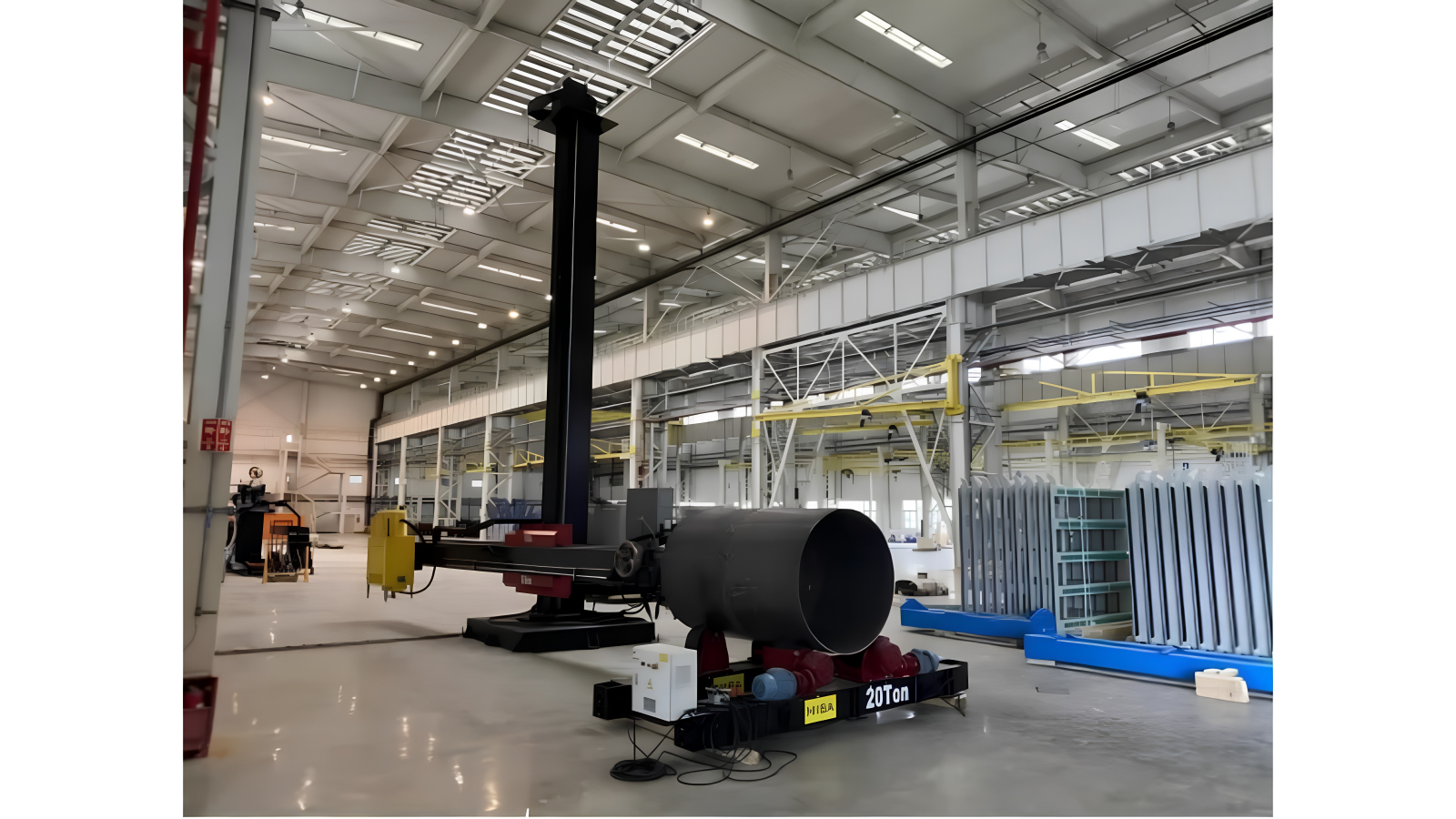
A column and boom welding manipulator arranged for large workpiece fabrication.
Why This Information Matters
The workpiece dimensions determine the required operating envelope, including boom extension, vertical travel, and torch positioning range. If the machine cannot reach the complete welding area, operators may need additional repositioning or separate equipment, which can interrupt production.
It is also important to distinguish between the load carried by the manipulator and the weight of the workpiece. A column and boom system generally supports the welding head and associated equipment, while a rotator or positioner may support and rotate the workpiece. These load requirements must be calculated separately.
Before requesting a quotation, prepare drawings or representative photographs of your largest and most frequently produced components. This gives the manufacturer a more reliable basis for recommending a suitable configuration.
2. What Welding Processes Must the Machine Support?
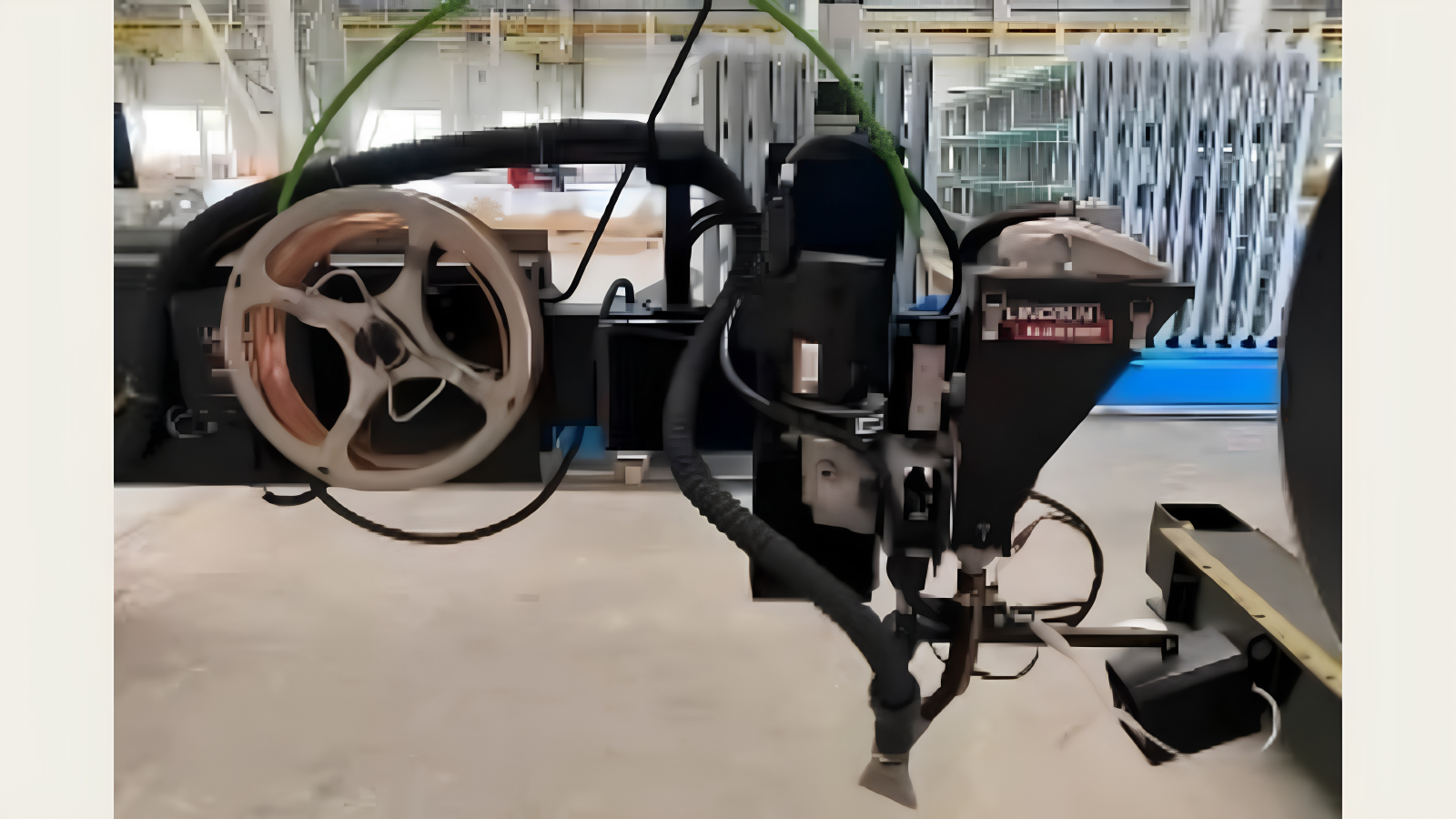
Different welding processes require different equipment arrangements. The welding manipulator must accommodate the selected welding head, torch assembly, wire feeding equipment, cables, and any auxiliary systems required by the process.
Common industrial welding processes include:
- Submerged Arc Welding (SAW): Frequently used for long seams and heavy-section components. The configuration may include a welding head, flux feeding equipment, and a flux recovery system.
- Gas Metal Arc Welding (GMAW/MIG/MAG): Suitable for various fabrication applications where controlled wire feeding and shielding gas delivery are required.
- Tungsten Inert Gas Welding (TIG): Used where the application requires controlled arc characteristics and specific weld quality requirements.
- Flux-Cored Arc Welding (FCAW): May be considered for applications requiring a flux-cored wire process, subject to the selected welding equipment and integration design.
Not every manipulator automatically supports every welding process. Confirm the compatibility of the welding power source, torch assembly, wire feeder, cable routing, and control interface with the manufacturer's engineering team.
Additional Process-Related Questions
When discussing welding process compatibility, ask the supplier:
- Can the machine accommodate the required welding head and power source?
- Is a dedicated wire feeder or flux delivery system necessary?
- Does the process require oscillation or automatic seam tracking?
- Are there special requirements for cable management and torch mounting?
- Can the system be adapted if production requirements change later?
MISA lists SAW, MAG, GMAW, and Force-TIG among its available welding process configurations. Its column and boom systems can also be configured with additional equipment according to project requirements. You can review the MISA welding manipulator product range for further configuration information.
Providing the welding process at the quotation stage helps prevent compatibility problems after delivery.
3. How Much Boom Reach and Vertical Travel Do You Need?
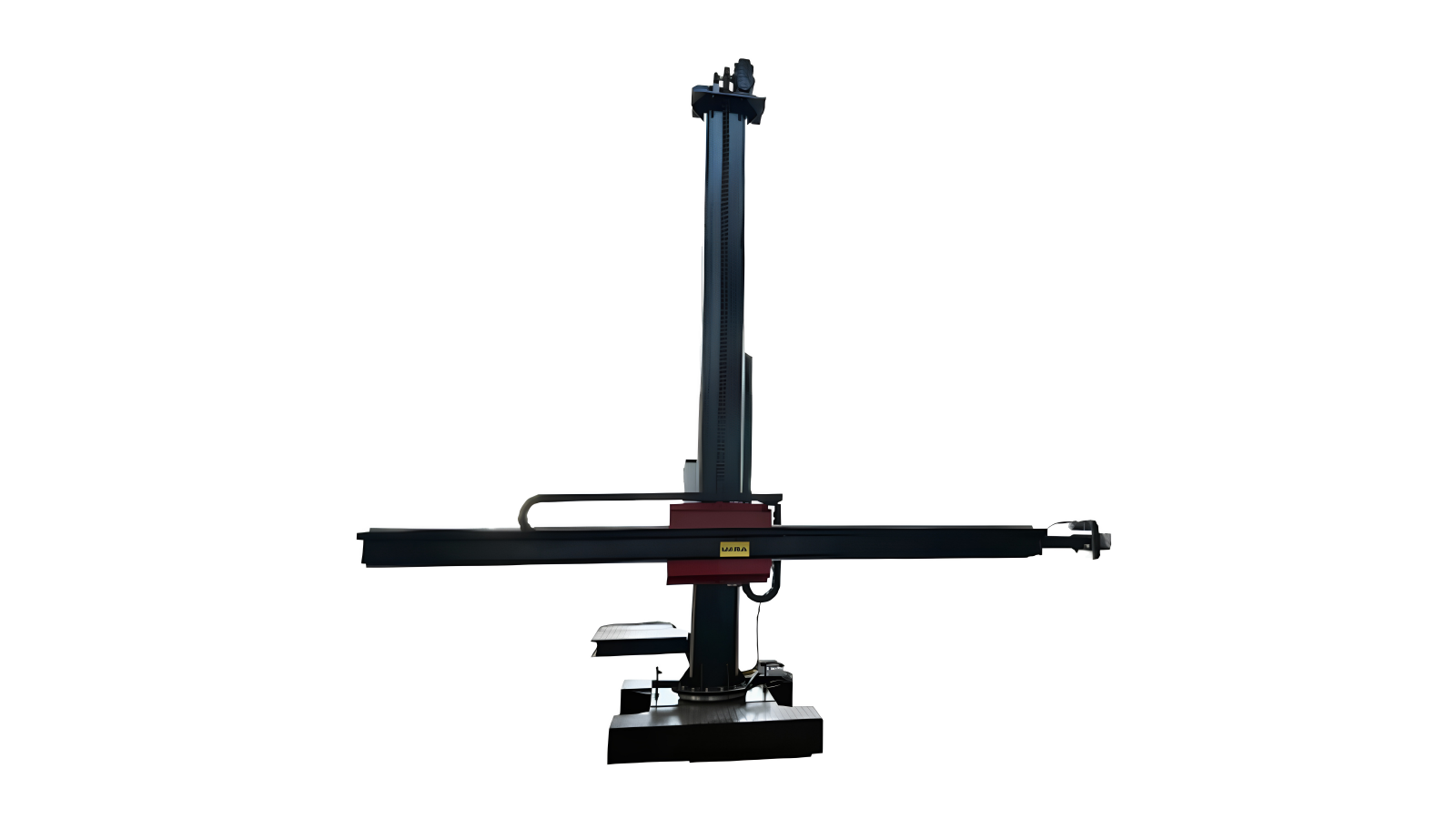
Boom reach and vertical travel determine the working envelope of a welding manipulator. These dimensions should be based on the actual location of the weld seams, the workpiece dimensions, and the position of supporting equipment.
Horizontal Boom Travel
Horizontal travel determines how far the welding head can extend from the column. A longer boom may be necessary for large vessels, wide structural components, or welding positions located far from the machine base.
However, a longer boom should not be selected simply because it provides a larger nominal working range. The machine must also maintain sufficient structural rigidity and positioning stability throughout its operating range.
Vertical Column Travel
Vertical travel determines the height range that the welding head can reach. This is particularly important when handling components with different diameters or welding joints at different elevations.
Cross-Slide Adjustment
A cross-slide provides additional lateral adjustment of the welding head. It allows operators to make fine positioning corrections without moving the entire manipulator. This can be useful when aligning the torch with weld joints or accommodating small variations in workpiece positioning.
How to Determine the Required Travel Range
Measure the distance between the manipulator's planned installation position and the farthest welding point. Then calculate the required vertical and horizontal movement, including the space needed for fixtures, workpiece rotation, and operator access.
For reference, MISA publishes several configurations with different travel ranges. Its motorized moving product range includes the LH-7080 with a 7 m vertical stroke and 8 m horizontal stroke, as well as the LH-5060 and LH-4030 models. These are specific model specifications, not universal requirements for every application.
Review the motorized moving welding manipulator configurations to understand how different travel ranges can be matched to production requirements.
4. What Payload Capacity Is Required?
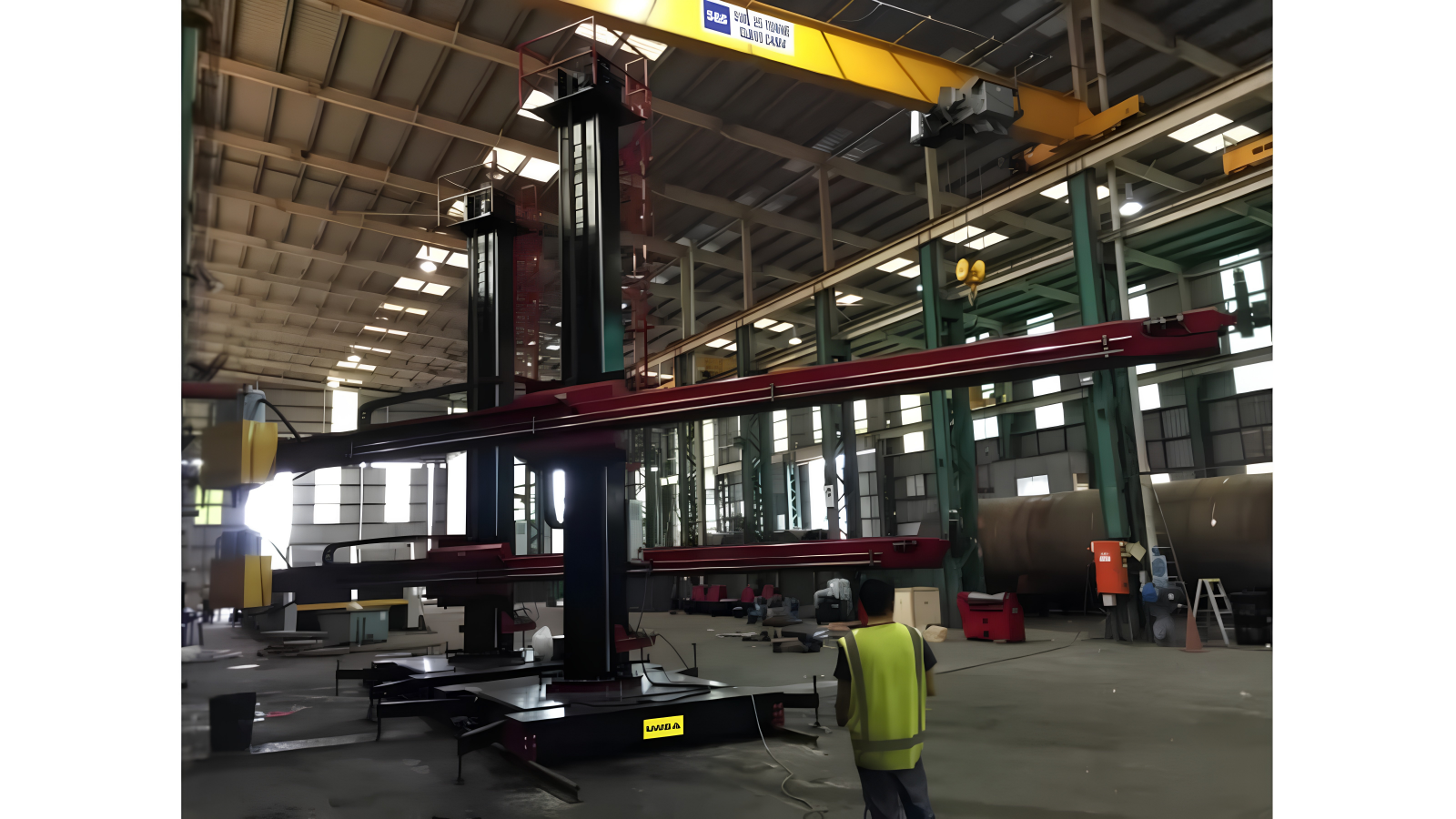
Payload capacity is another important specification that should be confirmed before purchasing a welding manipulator machine. The rated capacity must cover the equipment mounted on the boom, not the weight of the vessel or other workpiece supported by separate positioning equipment.
The actual load may include:
- Welding torch and welding head assembly.
- Wire feeder and associated mounting components.
- Flux delivery or recovery equipment, where applicable.
- Camera, seam tracking sensors, and monitoring devices.
- Oscillation units and other auxiliary mechanisms.
- Mounting brackets, cables, and additional accessories.
All these components should be considered when calculating the total load at the boom extremity. The supplier should also evaluate the load distribution, mounting position, and operating conditions rather than relying only on the combined equipment weight.
Compare Payload Capacity with Actual Configuration
MISA's published model information illustrates how capacity varies across configurations. For example, its light-type models include a maximum load at the boom extremity of 100 kg, while certain fixed-type models list 200 kg and the LH-7080 motorized moving model lists 300 kg.
These figures apply to the specified models and should not be treated as interchangeable ratings. Buyers should request the manufacturer's confirmation of the allowable load for the selected boom extension, accessories, and operating configuration.
It is also worth asking whether future upgrades, such as a larger welding head or additional monitoring equipment, can be accommodated without replacing the main machine.
5. Should You Choose a Fixed or Motorized Moving Configuration?
The installation configuration affects how the welding manipulator moves around the production area and how it serves different workstations. The right choice depends on the number of welding stations, workpiece dimensions, available floor space, and production frequency.
Fixed-Type Welding Manipulator
A fixed-type manipulator remains installed at a designated position. It is suitable for production layouts where the workpiece can be brought into the machine's operating range and the same welding station handles repeated operations.
Potential advantages include:
- A dedicated working position for recurring production tasks.
- A relatively straightforward arrangement for a fixed welding cell.
- Less need for machine relocation during normal operation.
- Convenient integration with permanently installed supporting equipment.
Motorized Moving-Type Welding Manipulator
A motorized moving configuration allows the manipulator to travel along a designated route, typically using a motorized base or rail-mounted arrangement. This can be useful when welding long workpieces or serving multiple working positions.
Potential advantages include:
- Greater coverage for long workpieces.
- Flexible positioning across a larger production area.
- Reduced need to move certain workpieces between welding stations.
- Possibility of integrating with a planned multi-station production layout.

Fixed installation configuration

Welding equipment arranged for large components
Which Configuration Is More Suitable?
Consider the following factors before making a decision:
| Evaluation Factor | Fixed Type | Motorized Moving Type |
|---|---|---|
| Installation | Installed at a designated workstation | Requires a planned travel route or moving base |
| Working Coverage | Limited by the installed working envelope | Can cover a larger area through machine travel |
| Production Layout | Suitable for dedicated welding stations | Suitable for larger or multi-position layouts |
| Floor Requirements | Requires a suitable foundation and installation space | May require additional floor space and rail arrangements |
| Typical Consideration | Repeated welding operations at a fixed location | Long workpieces or changing welding positions |
There is no universally better configuration. The final selection should be based on actual production movement, equipment access, and installation constraints.
Explore MISA's fixed-type welding manipulators and motorized moving-type models for more information.
6. Does the Machine Need to Work with a Welding Rotator or Positioner?
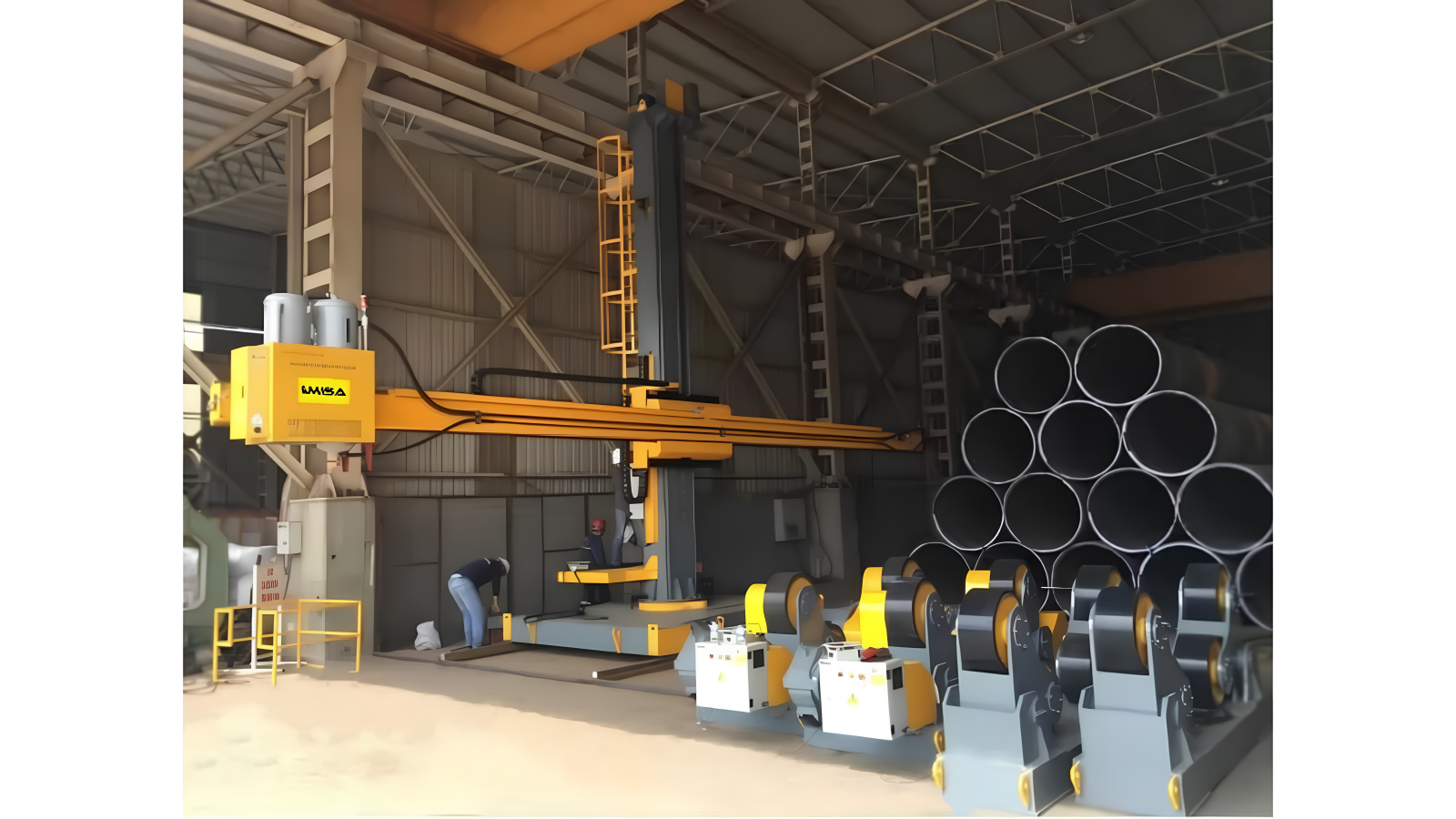
A welding manipulator does not always operate as an independent machine. In many industrial applications, it works together with a welding rotator or positioner to create a coordinated welding station.
The manipulator controls the position and movement of the welding head, while a rotator or positioner supports and moves the workpiece. Coordinating these functions can help maintain a suitable relationship between the torch and the weld seam.
When Is a Welding Rotator Needed?
Welding rotators are commonly used for cylindrical components such as pressure vessels, tanks, and pipes. They rotate the workpiece at a controlled speed, allowing the welding head to remain in a suitable position during circumferential welding.
When selecting a rotator, buyers should confirm the workpiece weight, diameter range, roller configuration, rotation speed, and alignment requirements.
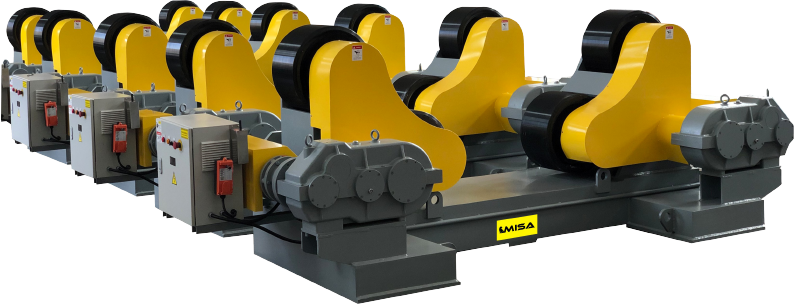
You can learn more about MISA's welding rotator and turning roll solutions for cylindrical workpieces.
When Is a Welding Positioner Needed?
A welding positioner is designed to rotate or tilt a workpiece so that the joint can be placed in a more accessible welding position. It is useful for components that require multiple welding angles or complex positioning.
Depending on the application, a positioner may be configured with a horizontal turning table, an elevating mechanism, or a head-and-tailstock arrangement.
For example, MISA's welding positioner product range provides options for different workpiece positioning requirements.
Questions to Ask About Equipment Integration
- Can the manipulator and rotator operate in a synchronized manner?
- Does the control system support coordinated speed adjustment?
- Can the equipment accommodate the maximum workpiece diameter and weight?
- Is additional electrical or PLC integration required?
- Will the equipment layout allow sufficient access for loading and unloading?
These questions are especially important when planning automated circumferential welding stations. The complete system should be evaluated as one production solution rather than as several unrelated machines.
7. What Motion Control and Automation Features Are Necessary?
Control systems influence how operators position the welding head, adjust machine movement, and coordinate different equipment components. The required level of automation depends on production volume, process consistency, operator experience, and the complexity of the welding operation.
Manual and Pendant Control
A hand pendant provides operators with direct control over machine movements. It may be suitable for applications where positioning adjustments are made by an operator and the production process does not require extensive automatic sequencing.
When evaluating a pendant, check its operating range, cable arrangement, control functions, and ease of use. Wireless control may be considered where the working layout makes cable movement inconvenient.
PLC-Based Control
A programmable logic controller (PLC) can coordinate machine movements and selected auxiliary functions. Depending on the system design, PLC control may support programmed motion sequences, equipment interlocks, and integration with other production equipment.
Additional Automation Options
- Seam tracking: Helps maintain torch alignment when the joint position varies within the system's detection and correction range.
- Camera monitoring: Allows operators to observe the welding area without relying entirely on direct visual access.
- Arc oscillation: Moves the welding torch according to a defined oscillation pattern when required by the welding procedure.
- Cross-slide adjustment: Provides additional positioning movement for torch alignment.
- Remote operation: Allows selected machine functions to be controlled from a suitable operating location.
- Coordinated control: Supports communication between the manipulator and compatible rotators or positioners.

Operator control pendant

Electrical control cabinet
MISA offers wired and wireless pendant options, touchscreen interfaces, PLC control systems, camera monitoring, and cross-slide configurations according to project requirements. These options should be selected according to the required operating functions rather than added without a clear production purpose.
Ask the manufacturer to explain which functions are included in the standard configuration and which require additional components or customization.
8. What Workshop Space and Installation Conditions Are Required?
Even a technically suitable welding manipulator can create operational problems if the workshop layout cannot accommodate its installation and movement. Installation conditions should therefore be reviewed before the machine is manufactured or shipped.
Workshop Height and Available Floor Space
Measure the available workshop height and check for overhead cranes, beams, lighting fixtures, ventilation equipment, and other obstructions. The maximum vertical travel of the manipulator must fit within the available clearance.
For floor space, consider the machine base, boom extension, workpiece loading area, equipment travel route, and maintenance access. A motorized moving system may require additional space for rails or other travel arrangements.
Foundation and Floor Conditions
The machine foundation must be suitable for its structural loads and operating conditions. The supplier should provide the necessary installation requirements, including foundation dimensions, anchoring details, and any applicable floor-loading information.
Do not assume that an existing concrete floor is automatically suitable. The installation team should review the actual foundation conditions before confirming the final arrangement.
Electrical and Utility Requirements
Confirm the available industrial power supply, voltage, frequency, grounding arrangement, and local electrical requirements. Also identify the utility requirements of the welding power source and auxiliary equipment.
MISA indicates that its equipment can be configured for different power supply requirements, with published options ranging from 110 V to 600 V. The exact voltage, electrical design, and applicable standards must be confirmed for the project.
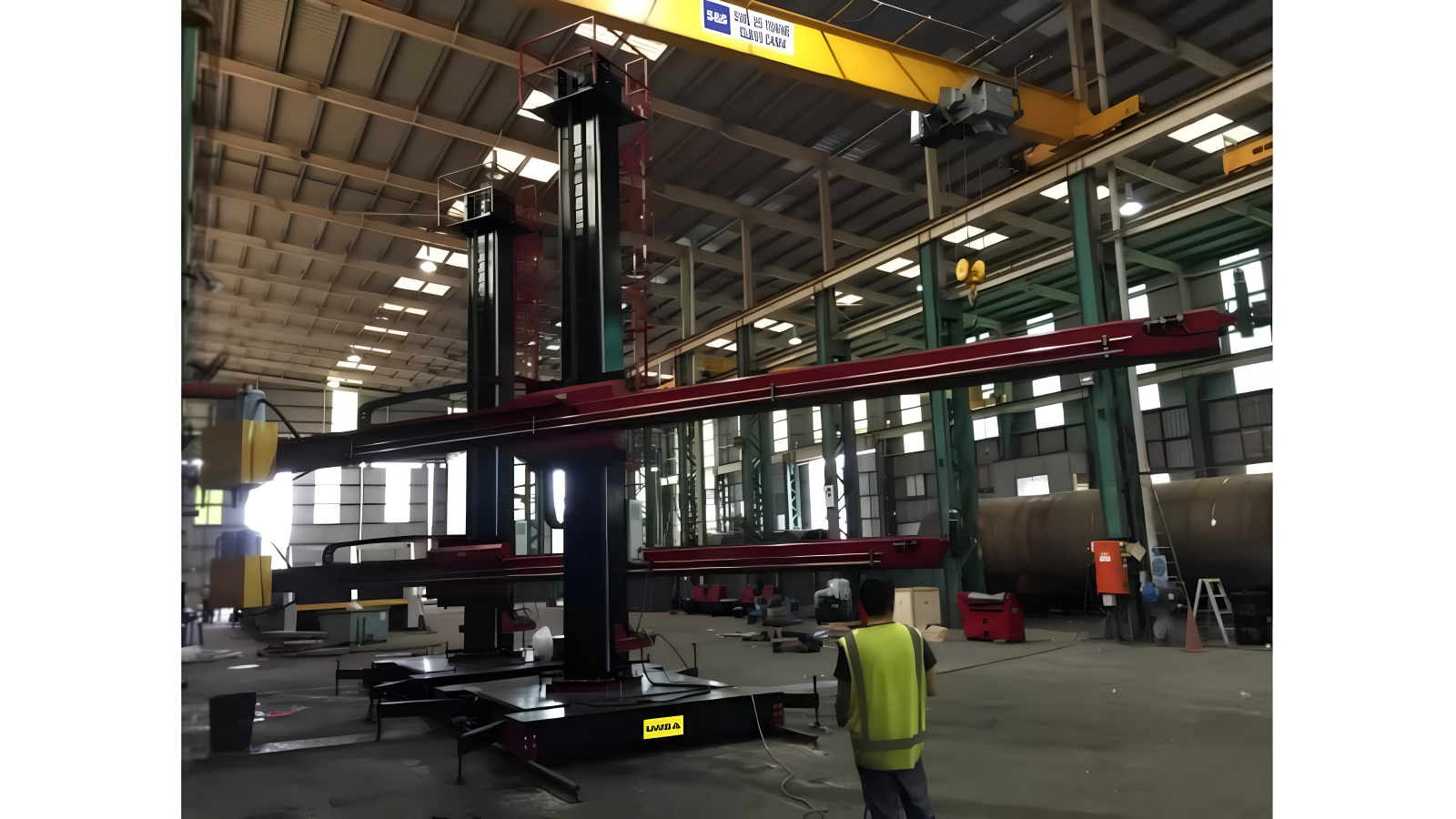
Installation Preparation Checklist
- Confirm the available workshop height and overhead clearance.
- Measure the installation area and equipment operating envelope.
- Review foundation strength and anchoring requirements.
- Identify power supply and electrical connection conditions.
- Plan loading, unloading, and maintenance access.
- Check crane access and the route for moving large machine components.
- Confirm ventilation, cable routing, and other site-specific requirements.
Providing workshop drawings and photographs to the manufacturer before ordering can help identify potential installation conflicts at an early stage.
9. What Safety and Maintenance Requirements Should Be Considered?
Safety and maintenance should be included in the purchasing discussion rather than treated as issues to address only after installation. A welding manipulator combines moving mechanical structures, electrical systems, welding equipment, and potentially heavy auxiliary components.
Safety Features to Confirm
Ask the manufacturer which safety functions are included in the proposed configuration and which must be provided by the workshop or integrated production line.
- Travel limit protection: Helps prevent the machine from moving beyond its intended operating range.
- Emergency stop: Provides an accessible means of stopping relevant machine functions during an emergency.
- Anti-fall protection: Helps address risks associated with vertical movement, where applicable to the machine design.
- Electrical protection: Includes suitable electrical protection and grounding arrangements.
- Mechanical guarding: Helps restrict access to hazardous moving components where necessary.
- Operating procedures: Clear instructions for machine operation, inspection, and maintenance.
Maintenance Requirements
Regular inspection helps maintain the mechanical condition and operating reliability of the equipment. The maintenance plan should be based on the manufacturer's instructions and actual operating conditions.
Typical maintenance considerations include:
- Inspecting guide rails, racks, gears, and other moving components.
- Checking lifting mechanisms and relevant safety devices.
- Inspecting electrical cables, connectors, and control components.
- Checking pendant controls and emergency stop functions.
- Maintaining lubrication according to the manufacturer's schedule.
- Inspecting welding head mounting components and cable routing.
Buyers should also ask about spare parts availability, technical documentation, remote troubleshooting, and on-site service arrangements. These factors can influence long-term operating costs and equipment availability.
Applicable Standards and Certification
Certification requirements depend on the destination market, machine configuration, and applicable regulations. Buyers should specify the standards and documentation required for their project before placing an order.
Where relevant, ask the supplier to identify the applicable conformity documentation, electrical safety requirements, and machine risk assessment information. Do not assume that a certification listed for one model or configuration automatically covers every customized system.
10. What Should Be Included in the Supplier's Quotation?
A useful quotation should do more than provide a machine price. It should clearly describe the proposed configuration, technical specifications, included accessories, project scope, and delivery responsibilities.
When comparing different manufacturers, make sure that each quotation is based on the same technical requirements. Otherwise, a lower price may simply reflect a smaller working range, fewer accessories, or a different level of automation.
Technical Specifications
Request a detailed specification sheet covering:
- Model number and machine configuration.
- Horizontal boom travel and vertical column stroke.
- Maximum allowable payload at the specified operating position.
- Travel speed and motion control method.
- Cross-slide dimensions and adjustment range, if applicable.
- Rotation or travel arrangements, where applicable.
- Electrical specifications and control system details.
- Applicable welding process and compatible equipment.
Included Accessories and Optional Equipment
Ask the supplier to separate standard components from optional items. This is particularly important when comparing machines that may include different levels of automation.
Clarify whether the quotation includes:
- Welding head mounting components.
- Welding power source and wire feeding equipment.
- Control pendant or wireless controller.
- PLC system and touchscreen interface.
- Camera or seam tracking system.
- Flux feeding and recovery equipment.
- Rail system, motorized base, or other movement accessories.
- Installation tools and spare parts.
Delivery, Installation, and After-Sales Service
Commercial terms should be clearly stated, including production lead time, packaging, shipping arrangements, installation responsibilities, commissioning, operator training, and warranty coverage.
For customized equipment, also confirm the approval process for technical drawings and the procedure for handling design changes during manufacturing.
| Quotation Item | Information to Confirm |
|---|---|
| Machine Configuration | Model, fixed or moving arrangement, and customized design |
| Technical Parameters | Travel range, payload, speed, and control specifications |
| Welding Equipment | Compatible welding process, power source, and accessories |
| Automation | PLC, pendant, camera, tracking, and synchronization functions |
| Installation | Foundation requirements, commissioning, and site preparation |
| Commercial Terms | Price, payment terms, delivery schedule, and shipping scope |
| After-Sales Support | Warranty, spare parts, technical support, and training |
A detailed quotation makes it easier to evaluate the actual value of each proposal and reduces the possibility of unexpected costs during installation.
Final Checklist Before Purchasing a Welding Manipulator Machine
Before sending a formal inquiry, review the following checklist. Having these details ready can help the manufacturer evaluate your project and prepare a more accurate technical proposal.
- Workpiece drawings, dimensions, and maximum weight are available.
- Required welding processes and joint types have been identified.
- Horizontal boom reach and vertical travel requirements are defined.
- Welding head and auxiliary equipment payload have been calculated.
- Fixed or motorized moving installation requirements have been evaluated.
- Compatibility with welding rotators or positioners has been confirmed.
- Required control functions and automation options have been identified.
- Workshop height, floor space, and foundation conditions have been checked.
- Electrical supply and applicable safety requirements have been confirmed.
- Quotation scope, delivery, installation, warranty, and support requirements are clear.
It is also helpful to prepare a short project brief containing production targets, expected operating hours, workpiece variations, and future expansion plans. This allows the manufacturer to consider not only the immediate equipment requirements but also the potential needs of your production line.
Conclusion
Purchasing a welding manipulator machine is an engineering and production planning decision, not simply a comparison of equipment prices. The right configuration must match the workpiece dimensions, welding process, boom reach, payload, workshop layout, and required level of automation.
By preparing these ten questions before requesting a quote, buyers can communicate their requirements more clearly, compare technical proposals more effectively, and reduce the risk of purchasing equipment that does not fit their production needs.
MISA provides column and boom welding manipulators in light-duty, heavy-duty, fixed, and motorized moving configurations. With options for different welding processes, control systems, and auxiliary equipment, its solutions can be configured for various industrial fabrication requirements.
If you are planning a new welding station or upgrading an existing production line, visit the MISA welding manipulator product page to explore available configurations. You can also contact the MISA engineering team with your workpiece drawings and technical requirements to discuss a suitable solution.