Innovative Welding Solutions: Rotators, Positioners, Manipulators and Automation Experts


English




.png)


Target Buyer Evaluation & Technical Selection Guide for B2B Procurement Managers and Welding Engineers
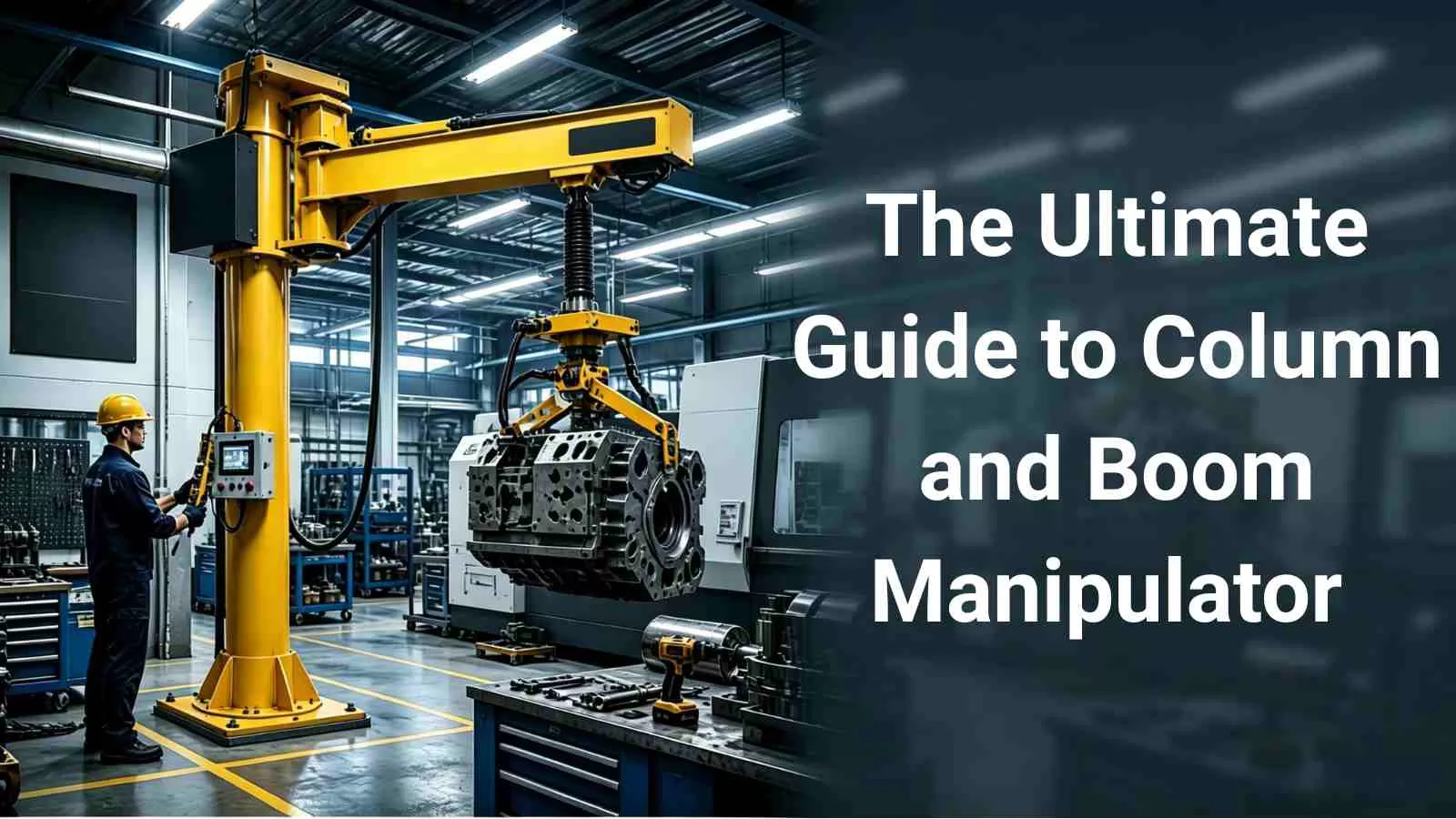
In high-capacity industrial fabrication—spanning pressure vessels, wind towers, and heavy piping—manual welding often introduces severe bottlenecks, high labor expenses, and safety risks. A Column and Boom Manipulator (also known as a welding boom and column) automates linear and circumferential welding by precisely positioning and driving the welding head over large workpieces.
This comprehensive guide details structural mechanics, key technical selection parameters, operational ROI, and integration techniques to help plant managers and welding engineers optimize shop-floor yield.
1. Introduction: Overcoming Heavy Welding Bottlenecks
2. What is a Column and Boom Manipulator & How Does It Work?
3. Key Structural Components: Anatomy of a Welding Manipulator
4. Classification & Types of Manipulators
5. Technical Specifications & Buyer Selection Parameters
6. Application Scenarios & Industry Use Cases
7. Financial ROI & Cost Savings Analysis
8. Why Partner with MISA Manufacturing?
9. Conclusion: Driving Future-Proof Efficiency with Welding Automation
Modern industrial plants face unprecedented pressures: qualified certified welders are increasingly scarce, material specifications demand flawless non-destructive testing (NDT) pass rates, and cycle time directly impacts profit margins. Manual or semi-automated positioning for multi-pass welds on tall structures or long seam pipes yields inconsistent travel speeds, operator fatigue, and excessive downtime.
A Column and Boom Manipulator resolves these operational barriers by transforming a manual process into a continuous, highly controlled machine operation. Engineering leaders such as MISA design automated manipulator systems that seamlessly interface Submerged Arc Welding (SAW), MIG/MAG, and TIG processes with rotators and positioners—delivering up to 40% higher arc-on time and drastic cost reductions.
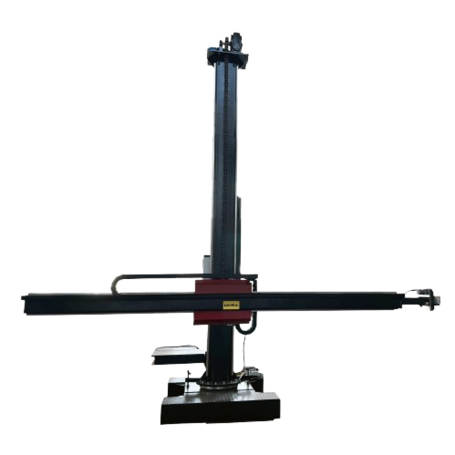
A column and boom manipulator is a structural welding automation unit consisting of a rigid vertical column and a horizontal boom that extends, retracts, and travels vertically along the column. The welding head (along with wire feeders, flux recovery units, and tracking systems) is mounted at the tip of the boom.
Longitudinal Seam Welding: The workpiece remains stationary while the horizontal boom travels at a precise, controlled welding speed along the seam, or the entire manipulator moves along floor rails.
Circumferential Seam Welding: The boom remains fixed at a specific height and extension, positioning the weld head over the seam while a MISA Welding Rotator or Positioner rotates the cylindrical vessel beneath it.
Selecting the right manipulator requires evaluating its mechanical integrity, drive precision, and safety mechanism under heavy dynamic loads.
| Component | Engineering Function | MISA Quality Standard |
|---|---|---|
| Vertical Column | Provides structural height and stability; guides vertical elevation. | Heavy-duty structural steel box section with high deflection resistance. |
| Horizontal Boom | Reaches inside/outside workpieces to deliver the welding payload. | Machined linear guide rails ensuring vibration-free horizontal stroke. |
| Elevating Mechanism | Drives boom up/down; includes counterweights and brake systems. | Fitted with anti-fall safety locking gear and heavy-duty chain drive. |
| Slewing Structure | Rotates the entire column assembly (manual or motorized 360°). | Precision slewing bearing with smooth locking mechanism. |
| Motorized Travel Base | Carries the manipulator along shop-floor tracks for long vessels. | VFD-driven AC motors with rail clamps for accurate positioning. |
| Cross-Slide & Tracker | Fine-tunes torch alignment along X/Y axes during welding. | Motorized cross-slides with tactile or laser seam tracking compatibility. |
Depending on workpiece dimensions and workshop throughput, B2B buyers can choose across several structural categories:
Ideal for smaller diameter pipe spooling, light tank fabrication, and MIG/TIG processes. Lightweight structure with fast setup times.
Engineered for Submerged Arc Welding (SAW) with heavy dual-wire payloads, flux recovery systems, and heavy operator platforms. Designed for thick-walled pressure vessels and wind towers.
When evaluating suppliers, purchasing managers and welding engineers should perform calculations based on their maximum workpiece specs:
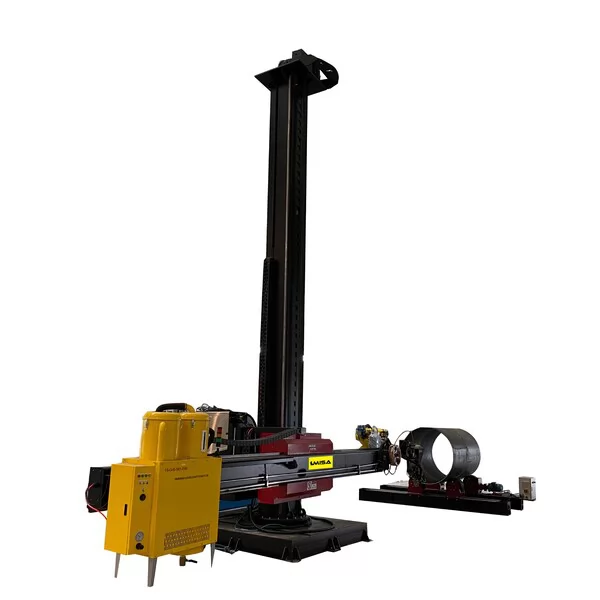
Investing in automated manipulators shifts shop performance from manual dependency to capital efficiency:
As a specialized global manufacturer of welding automation equipment, MISA brings engineering expertise, customized solutions, and robust build quality to industrial plants worldwide.
In an increasingly competitive industrial landscape, upgrading to automated welding technology is no longer optional—it is a vital imperative for long-term growth. The Column and Boom Manipulator (2026 Edition) stands as an indispensable asset for heavy manufacturing, bridging the gap between stringent weld quality standards and the growing shortage of skilled manual labor. By offering pinpoint positional precision, high boom deflection stability, and seamless synchronization with turning rolls and positioners, a column and boom system transforms demanding fabrication challenges into streamlined, highly repeatable operations.
When evaluating your automation investment, success hinges on choosing an engineering partner capable of tailoring machinery to your precise workpiece dimensions, duty cycles, and shop floor layouts. MISA continues to empower plant managers, procurement teams, and welding engineers across the globe with robust, ISO-compliant equipment engineered for reliability, high NDT pass rates, and fast capital payback. Equipping your facility with MISA’s column and boom manipulators ensures that your operations remain scalable, safe, and cost-effective for years to come.