Innovative Welding Solutions: Rotators, Positioners, Manipulators and Automation Experts


English




.png)


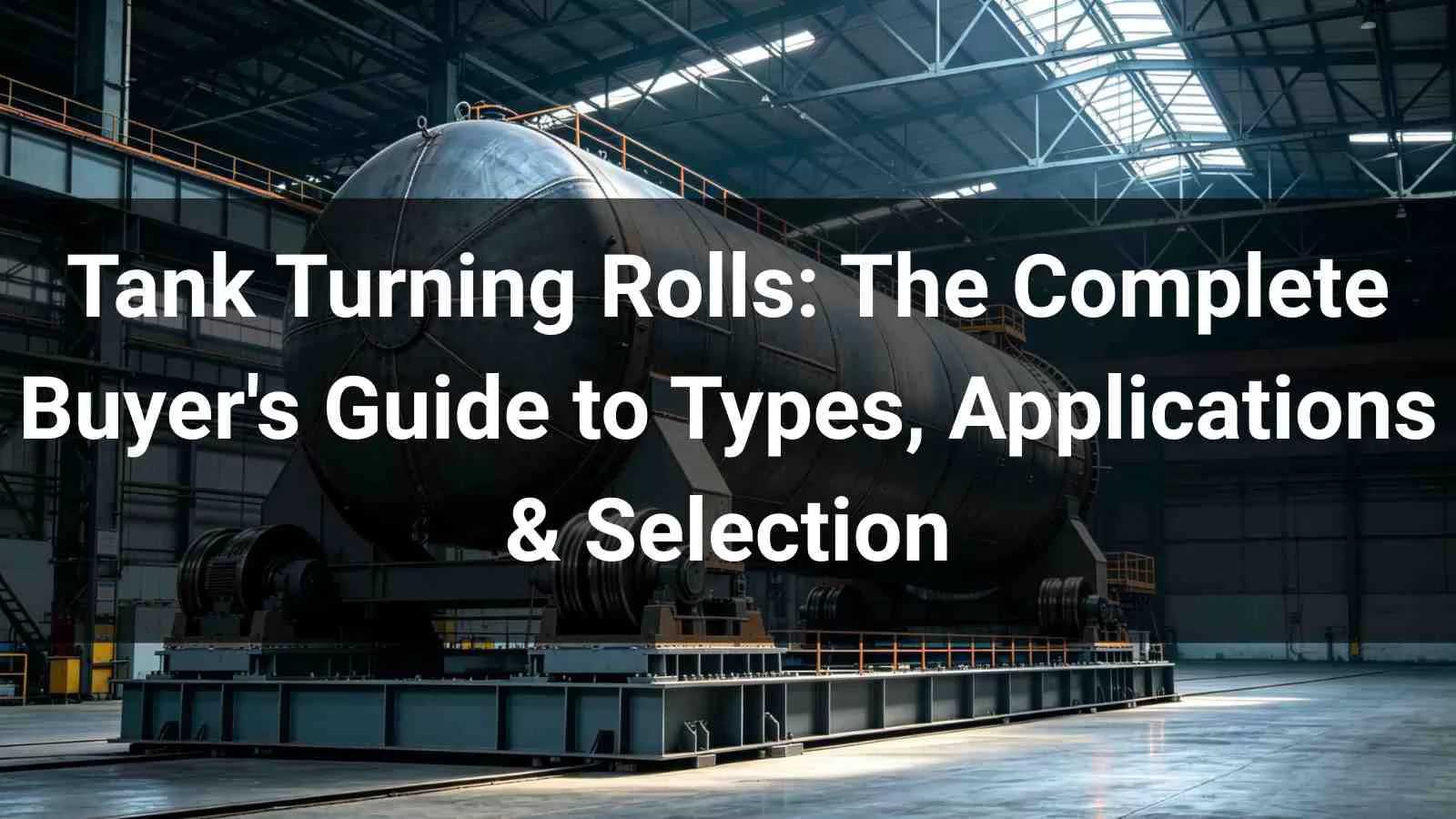
Rotating a large pressure vessel or storage tank during welding is far more challenging than moving a standard workpiece. As vessel sizes increase, manual repositioning becomes slower, less precise, and more dependent on overhead cranes, resulting in lower productivity and higher labor costs.
This is where tank turning rolls play a vital role.
Also known as welding rotators, welding turning rolls, or tank rotators, these systems are designed to support and rotate cylindrical workpieces safely and smoothly during welding, assembly, grinding, inspection, and painting. By keeping the workpiece rotating at a controlled speed, they allow welders or automated welding systems to maintain the ideal welding position, resulting in higher weld quality and greater production efficiency.
Today, tank turning rolls are widely used across industries such as:
As manufacturers increasingly adopt automated welding and intelligent production lines, turning rolls have evolved from simple roller supports into advanced systems equipped with variable-speed drives, PLC controls, wireless operation, and synchronization with welding manipulators and robotic welding cells.
However, choosing the right tank turning rolls involves much more than selecting a machine with sufficient load capacity. Buyers must also consider factors such as vessel diameter range, roller material, drive configuration, speed control, automation compatibility, safety features, and long-term maintenance costs.
Selecting equipment that matches your production requirements can improve throughput, reduce downtime, and deliver a faster return on investment. On the other hand, an unsuitable solution may lead to unstable rotation, frequent maintenance, inconsistent weld quality, and unnecessary operating expenses.
This guide is written specifically for engineers, production managers, procurement professionals, and fabrication business owners who are evaluating tank turning rolls for industrial applications.
Whether you're purchasing your first welding rotator or upgrading an existing production line, you'll find practical insights to help you compare options, understand key specifications, and make a confident buying decision.
Tank turning rolls are industrial welding support equipment designed to rotate cylindrical workpieces safely and continuously during fabrication. They are primarily used for welding, assembly, grinding, inspection, and painting of tanks, pressure vessels, pipes, wind tower sections, and other round components.
In the industry, you may also hear them referred to as welding rotators, welding turning rolls, tank rotators, or vessel turning rolls. While the terminology differs by region or manufacturer, these names generally describe the same type of equipment.
Rather than repeatedly lifting and repositioning a heavy workpiece with an overhead crane, tank turning rolls allow the vessel to rotate smoothly on powered rollers. This enables operators—or automated welding systems—to maintain the ideal working position throughout the fabrication process.
For manufacturers producing large cylindrical components, this seemingly simple function delivers significant improvements in efficiency, weld quality, and workplace safety.
Modern fabrication projects often involve workpieces weighing several tons—or even hundreds of tons. Rotating these components manually is time-consuming, labor-intensive, and can increase the risk of accidents or welding inconsistencies.
Tank turning rolls address these challenges by providing controlled, stable rotation throughout the production process.
Their key benefits include:
For industries where welding quality and productivity directly affect project costs, tank turning rolls have become essential equipment rather than optional accessories.
Tank turning rolls are widely used wherever large cylindrical components need to be fabricated. Some of the most common applications include:
Whether the workpiece weighs 5 tons or 500 tons, the objective remains the same: rotate it safely and accurately while maintaining a stable working position.
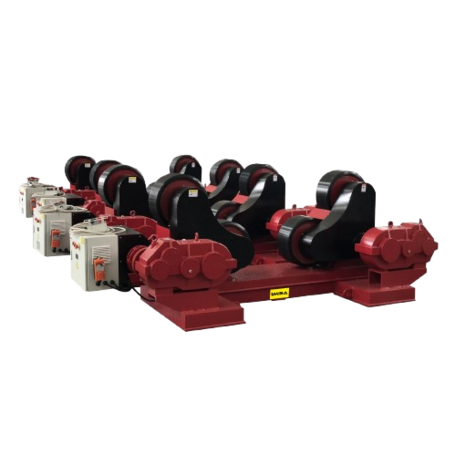
Although different manufacturers offer various configurations, most systems consist of the following core components:
Drive Unit
The drive unit contains the electric motor, gearbox, and powered rollers. It generates the torque needed to rotate the workpiece at a controlled speed. Modern drive units are typically equipped with variable-speed control, allowing operators to adjust rotation according to the welding process.
Idler Unit
The idler unit supports the opposite end of the workpiece. It does not provide power but ensures proper weight distribution and stable rotation. For long vessels, multiple idler units can be added to improve support and prevent deflection.
Roller Wheels
The rollers are the contact point between the machine and the workpiece. Depending on the application, they may be manufactured from:
Selecting the right roller material helps maximize both equipment life and workpiece protection.
Control System
Most modern tank turning rolls include a user-friendly control system that allows operators to:
Advanced models may also support wireless remote control, PLC integration, and synchronization with automated welding systems.
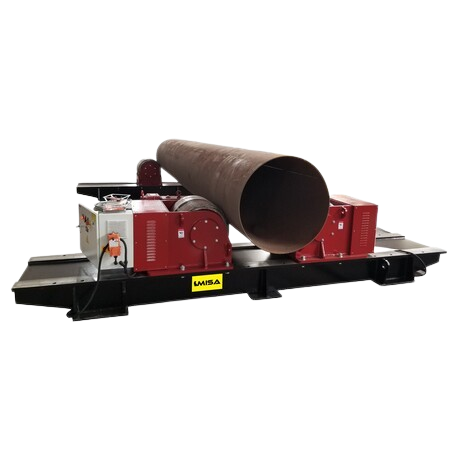
Although tank turning rolls are available in many configurations, their operating principle is straightforward.
A cylindrical workpiece is placed on two or more roller assemblies. One set of rollers is powered by an electric motor, while the remaining rollers act as supports. As the drive rollers rotate, friction between the rollers and the workpiece causes the vessel to rotate smoothly around its own axis.
Because the workpiece remains fully supported throughout the operation, welding can continue without repeated lifting or repositioning.
Understanding the operating sequence can help buyers evaluate whether a particular system matches their production requirements.
Step 1: Load the Workpiece
Using an overhead crane or other lifting equipment, the cylindrical workpiece is positioned onto the drive and idler rollers. Proper load distribution is essential to ensure smooth and stable rotation.
Step 2: Adjust the Roller Position
Depending on the equipment design:
Choosing the right support angle improves stability and minimizes vibration during operation.
Step 3: Set the Rotation Speed
Before welding begins, the operator selects the appropriate rotation speed. Most modern systems use a Variable Frequency Drive (VFD), allowing stepless speed adjustment to match different welding processes such as SAW, MIG/MAG, or TIG. Maintaining a consistent rotation speed is critical for achieving uniform weld quality.
Step 4: Begin Welding
Once the workpiece starts rotating, the welder—or an automated welding system—can maintain the ideal welding position without interruption. This continuous movement offers several advantages:
For automated production lines, stable rotation also makes it easier to integrate with welding manipulators and robotic welding systems.
Step 5: Complete the Operation
After welding, grinding, or inspection is finished, the rotation is stopped and the completed workpiece is removed. The equipment is then ready for the next production cycle, helping minimize downtime between jobs.
Some fabrication shops still rely on cranes to reposition workpieces manually. While this may be acceptable for occasional jobs, it becomes increasingly inefficient as production volumes grow.
The comparison below highlights the advantages of using dedicated tank turning rolls.
| Feature | Tank Turning Rolls | Manual Rotation |
|---|---|---|
| Rotation Accuracy | Excellent | Limited |
| Production Efficiency | High | Low |
| Weld Consistency | Excellent | Operator-dependent |
| Crane Usage | Minimal | Frequent |
| Labor Requirement | Low | High |
| Workplace Safety | High | Lower |
| Automation Compatibility | Excellent | Poor |
For manufacturers seeking higher productivity and repeatable welding quality, dedicated turning rolls provide a far more efficient solution.
Even small fluctuations in rotation speed can affect weld quality. Irregular movement may result in inconsistent bead appearance, uneven penetration, or unnecessary rework.
High-quality tank turning rolls are designed to provide:
These characteristics become increasingly important when welding thick-wall pressure vessels, large storage tanks, or components that must meet strict quality standards.
Buyer's Tip: When comparing tank turning rolls, don't focus solely on maximum load capacity. Consider how the machine will perform in your daily production environment. Factors such as ease of setup, speed stability, control options, and compatibility with future automation can have a greater impact on long-term productivity than capacity alone.
Tank turning rolls are available in several configurations, each designed to meet different production requirements. The right choice depends on factors such as workpiece size, production volume, welding process, and budget.
Although manufacturers may offer customized solutions, most industrial applications can be covered by four main types of tank turning rolls.
Conventional tank turning rolls are the most widely used and cost-effective option. They feature fixed roller assemblies mounted on adjustable frames, allowing operators to manually reposition the rollers to accommodate different vessel diameters.
Their simple mechanical design makes them reliable, easy to maintain, and suitable for workshops that manufacture products within a relatively consistent size range.
Advantages:
Considerations:
Changing between different vessel diameters requires manual adjustment, which increases setup time compared with self-aligning models.
Best Applications:
Pressure vessel workshops, pipe fabrication, small and medium-sized tank production, and workshops producing standardized products.
Self-aligning tank turning rolls are designed for manufacturers handling workpieces with varying diameters. Instead of manually adjusting the rollers, the roller assemblies automatically pivot to match the diameter of the vessel. This greatly reduces setup time and simplifies operation, making these systems ideal for high-mix production environments.
Advantages:
Considerations:
Self-aligning systems typically have a higher purchase price than conventional models, but the productivity gains often justify the investment for manufacturers with diverse product lines.
Best Applications:
Contract fabrication shops, wind tower manufacturing, heavy pressure vessel production, automated welding lines, and companies processing multiple vessel sizes daily.
Fit-up turning rolls are specifically designed for the assembly stage of fabrication rather than the welding stage. These systems use hydraulic lifting and alignment mechanisms to accurately position two cylindrical sections before welding begins. By ensuring proper alignment and root gap, they reduce rework and improve the quality of the finished weld.
Advantages:
Best Applications:
Fit-up turning rolls are commonly used in pressure vessel manufacturing, heat exchanger production, pipeline fabrication, large storage tank assembly, and offshore engineering projects. For manufacturers producing long welded assemblies, fit-up systems can significantly reduce preparation time.
Standard models may not be sufficient for oversized or unusually heavy workpieces. In these cases, manufacturers often provide heavy-duty or fully customized turning roll systems.
These solutions are engineered to meet specific production requirements and may include multiple synchronized drive units, reinforced frames, specialized roller materials, or integrated automation features. Heavy-duty turning rolls are commonly available in capacities ranging from 100 tons to over 1,000 tons, depending on the application.
Typical Features:
Best Applications:
Wind tower fabrication, offshore equipment, shipbuilding, large storage tanks, nuclear and energy projects, and heavy industrial equipment manufacturing. For these demanding applications, working with a manufacturer capable of providing customized engineering support is often more valuable than purchasing a standard off-the-shelf solution.
The following table summarizes the strengths of each configuration.
| Type | Flexibility | Setup Time | Investment | Best For |
|---|---|---|---|---|
| Conventional | Moderate | Manual | $$ | Standard production with fixed vessel sizes |
| Self-Aligning | Excellent | Automatic | $$$ | Mixed production and frequent size changes |
| Fit-Up | High | Fast | $$$ | Precision alignment before welding |
| Heavy-Duty / Custom | Customized | Application-specific | $$$$ | Large or specialized fabrication projects |
While each type serves a different purpose, the best choice should always be based on your production workflow rather than simply selecting the most advanced model.
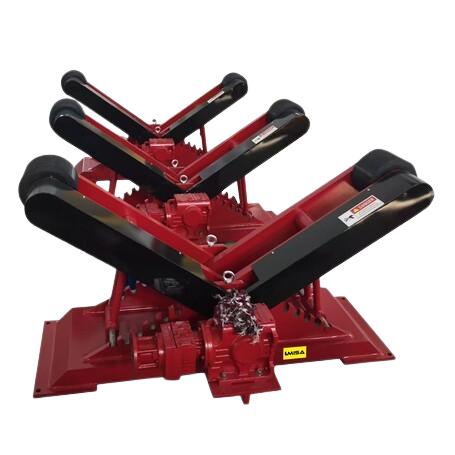
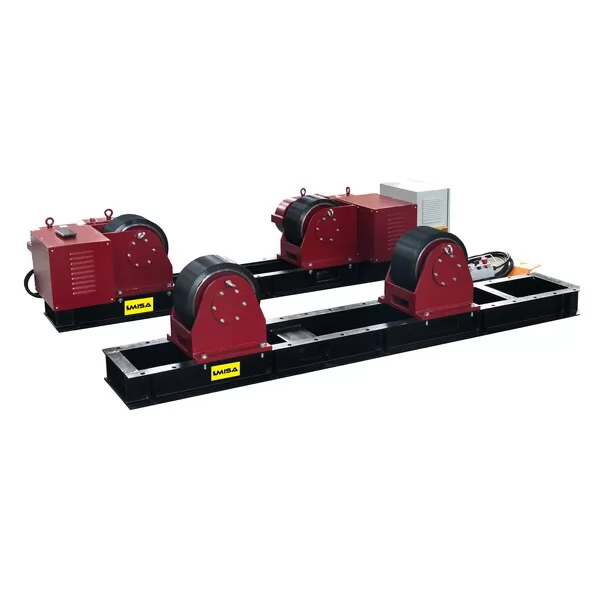
Once you've identified the appropriate type of tank turning rolls, the next step is evaluating the technical features that will affect performance, reliability, and long-term operating costs. Below are the factors experienced buyers typically consider before making a purchasing decision.
Load capacity is one of the first specifications buyers compare, but it should not be the only deciding factor. Instead of selecting equipment based solely on your current projects, consider your future production plans. Choosing a system with a reasonable safety margin can prevent costly equipment upgrades as your business grows.
For example:
Different projects require different vessel diameters. If your workshop regularly processes a variety of tank sizes, self-aligning turning rolls can significantly reduce setup time. However, if your production focuses on a limited range of standard diameters, conventional turning rolls may provide better value. Matching the machine to your production mix is often more important than purchasing the most sophisticated model.
Roller material directly affects both equipment durability and workpiece protection.
Polyurethane (PU) rollers are commonly chosen for:
Steel rollers are better suited for:
Many manufacturers also offer steel-core rollers with polyurethane coatings to combine the advantages of both materials.
Different welding processes require different rotational speeds. A quality tank turning roll should provide:
Consistent speed is especially important for automatic submerged arc welding (SAW), where even small variations can affect weld quality.
Manufacturing is becoming increasingly automated, and your equipment should be able to grow with your production line. When evaluating suppliers, ask whether the turning rolls can integrate with:
Choosing an automation-ready solution today can save significant upgrade costs in the future.
A reliable machine is only part of the investment. Equally important is the manufacturer's ability to provide technical support throughout the equipment's lifecycle. Before placing an order, confirm that the supplier offers:
Before making your final decision, review the following checklist:
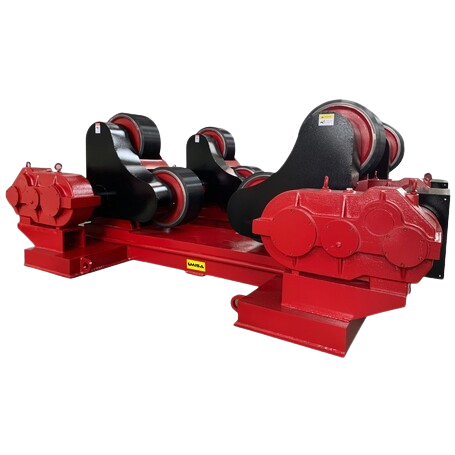
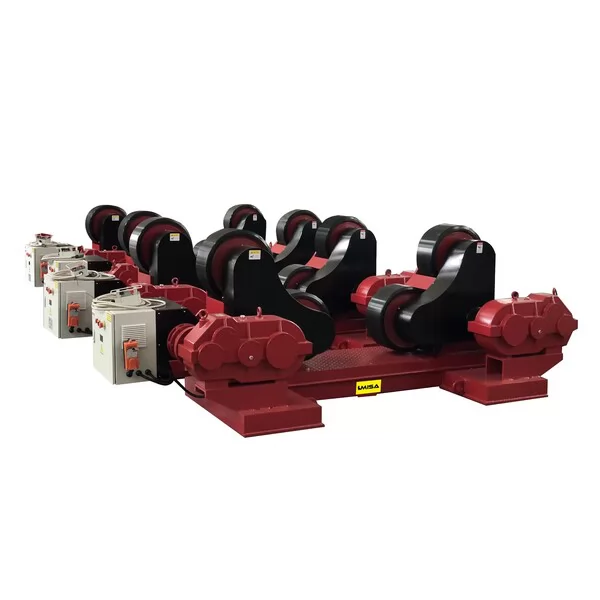
Tank turning rolls are used wherever large cylindrical workpieces need to be rotated safely and accurately during fabrication. While they are most closely associated with pressure vessel manufacturing, their applications extend across numerous industries where welding quality, production efficiency, and safe material handling are critical.
Pressure vessel fabrication is one of the largest application areas for tank turning rolls. Pressure vessels often require multiple circumferential and longitudinal welds that must comply with strict international standards such as ASME, PED, or EN regulations. Maintaining a consistent welding position is essential for achieving high-quality welds and minimizing distortion.
Tank turning rolls allow the vessel to rotate smoothly while the welding head remains in an optimal position, improving both productivity and weld consistency. Typical products include reactors, boilers, heat exchangers, air receivers, and LPG storage vessels. For manufacturers producing vessels in different sizes, self-aligning turning rolls can significantly reduce setup time between projects.
Storage tanks are widely used in industries such as oil and gas, water treatment, chemicals, food processing, and pharmaceuticals. Because these tanks are often large in diameter and length, manual handling is inefficient and increases the risk of damage during fabrication. Tank turning rolls help manufacturers rotate tanks smoothly during welding, improve weld accessibility, reduce crane usage, speed up grinding, and simplify inspection procedures.
Large-diameter pipes require precise circumferential welds, particularly in industries where weld integrity directly affects operational safety. Tank turning rolls are commonly used during the fabrication of oil/natural gas pipelines, power plant piping, chemical processing pipelines, and offshore pipe systems.
As the renewable energy industry continues to expand, wind tower manufacturing has become one of the fastest-growing applications for heavy-duty welding rotators. Each wind tower consists of several large cylindrical sections that require long, continuous welds. Heavy-duty tank turning rolls enable manufacturers to rotate tower sections safely, improve welding efficiency, support automated submerged arc welding (SAW), and reduce handling time.
Shipyards fabricate a wide range of cylindrical components, including fuel tanks, ballast tanks, pipe modules, offshore pressure vessels, and marine process equipment. Because these components are often large and heavy, tank turning rolls help reduce crane movements while improving welding accuracy and workplace safety.
Many industrial machines include cylindrical components that require precision welding or assembly, such as rotary kilns, dryers, industrial drums, mining equipment, cement machinery, and steel processing equipment. In these applications, tank turning rolls improve manufacturing efficiency while reducing manual handling.
Purchasing tank turning rolls is not simply an equipment upgrade—it is an investment in production efficiency, product quality, and operational safety.
Consistent workpiece rotation helps maintain an ideal welding position throughout the fabrication process. This results in more uniform weld beads, better penetration consistency, reduced welding defects, lower rework rates, and improved dimensional accuracy.
Without turning rolls, operators frequently stop production to reposition heavy workpieces using cranes or forklifts. Tank turning rolls eliminate much of this non-value-added handling by providing continuous rotation throughout the welding process.
Moving heavy cylindrical workpieces manually introduces unnecessary risks. Tank turning rolls reduce reliance on cranes during welding, helping create a safer working environment by minimizing unstable load movement, manual repositioning, and operator fatigue.
Manufacturing is increasingly moving toward automated welding. Tank turning rolls can be integrated with welding manipulators, robotic welding systems, automatic SAW equipment, and PLC-controlled production lines.
Although purchasing tank turning rolls requires an initial investment, the long-term financial benefits are often substantial. By reducing labor, minimizing rework, shortening production cycles, and lowering equipment downtime, manufacturers can significantly improve their return on investment.
No single tank turning roll is suitable for every application. The best choice depends on your production environment, workpiece specifications, and long-term business goals.
Start by evaluating your typical workpieces:
| Production Requirement | Recommended Solution |
|---|---|
| Standard vessel sizes | Conventional turning rolls |
| Multiple vessel diameters | Self-aligning turning rolls |
| Precision section alignment | Fit-up turning rolls |
| Extremely heavy workpieces | Heavy-duty customized systems |
An experienced manufacturer should provide engineering consultation, customized solutions, quality manufacturing, international certifications, installation guidance, spare parts support, and responsive after-sales service.
If your company plans to manufacture larger vessels, increase production volume, or introduce automated welding, it may be worthwhile to invest in a more flexible turning roll system from the outset.
Although both machines improve welding efficiency, they serve different purposes and are often used together rather than as alternatives.
| Feature | Tank Turning Rolls | Welding Positioner |
|---|---|---|
| Workpiece Shape | Cylindrical | Various shapes |
| Rotation Method | Roller-driven | Table-driven |
| Typical Workpieces | Tanks, pipes, vessels | Flanges, frames, fittings |
| Load Capacity | High to ultra-high | Low to high |
| Best Application | Circumferential welding | Multi-angle positioning |
Expert Tip for Buyers: When comparing quotations from different suppliers, avoid focusing solely on price or load capacity. Instead, evaluate the overall solution—is the equipment designed for your workflow, adaptable for future expansion, constructed with high-quality components, and backed by reliable technical support?
Even the highest-quality tank turning rolls require regular maintenance to ensure safe operation, consistent performance, and a long service life.
Before each shift, operators should check for loose bolts, damaged roller surfaces, oil leaks, unusual noises/vibrations, worn electrical cables, and proper emergency stop functionality.
Cleaning dust, welding slag, metal chips, and grease from roller surfaces regularly maintains stable rotation, reduces wear, improves traction, and protects workpiece surfaces.
Bearings, gearboxes, and moving parts should be lubricated according to manufacturer recommendations using the specified lubricant grade.
Periodically inspect motors, control panels, VFDs, limit switches, and remote controls to prevent electrical reliability issues.
| Interval | Recommended Tasks |
|---|---|
| Daily | Visual inspection, roller cleaning |
| Weekly | Check fasteners, inspect cables, test controls |
| Monthly | Lubricate bearings, inspect gearbox, verify speed accuracy |
| Quarterly | Inspect roller wear, electrical system, drive alignment |
| Annually | Comprehensive inspection and replacement of worn components if necessary |
Several technical and commercial factors influence the total investment cost:
Selecting the right manufacturer is just as important as selecting the right machine. MISA has built a strong reputation in the welding equipment industry by delivering high-quality tank turning rolls designed for demanding industrial applications.
MISA offers a wide selection of welding rotators including conventional tank turning rolls, self-aligning rotators, fit-up systems, and heavy-duty customized solutions.
MISA works closely with customers to develop tailored solutions based on capacity, workpiece dimensions, workflow, and automation goals.
Emphasizing precision manufacturing and strict quality control, MISA equipment delivers smooth rotation, precise speed control, long service life, and low maintenance.
MISA provides equipment selection guidance, technical consultation, installation training, and responsive after-sales service worldwide.
Tank turning rolls are used to rotate cylindrical workpieces during welding, assembly, grinding, inspection, and painting, improving efficiency, consistency, and workplace safety.
Yes. The terms tank turning rolls, welding rotators, and welding turning rolls are often used interchangeably in the industry.
Self-aligning turning rolls automatically adapt to different workpiece diameters, whereas conventional turning rolls require manual adjustment of the roller spacing.
Select equipment based on the maximum weight of your workpieces while allowing an appropriate safety margin for future production requirements.
Yes. MISA offers customized solutions for special load capacities, unique workpiece sizes, control systems, and automation requirements.
Optionally yes. Modern tank turning rolls easily integrate with welding manipulators, robotic welding cells, PLC systems, and automatic SAW equipment.
Routine maintenance involves cleaning roller surfaces, lubricating moving components, checking fasteners, and inspecting electrical controls on a scheduled basis.
Evaluate their engineering expertise, manufacturing quality, customization options, technical support, spare parts availability, and after-sales service reliability.
Tank turning rolls have become an indispensable part of modern fabrication, enabling manufacturers to improve welding quality, increase productivity, and enhance workplace safety when producing cylindrical components.
By understanding the different types of tank turning rolls, evaluating key technical features, and partnering with an experienced manufacturer like MISA, buyers can make informed investment decisions that support both current production and future business growth.
If you're looking for reliable, high-performance tank turning rolls tailored to your specific fabrication needs, visit MISA Manufacturing to explore a customized automation solution built around your production requirements.