Innovative Welding Solutions: Rotators, Positioners, Manipulators and Automation Experts


English




.png)


In modern heavy fabrication industries, welding automation equipment has transitioned from a competitive advantage to an absolute operational necessity. As global infrastructure demands larger pressure vessels, massive storage tanks, and heavy-walled industrial piping, fabrication plants face severe operational bottlenecks.
Industrial manufacturers frequently struggle with handling massive, heavy, and awkward cylindrical workpieces while grappling with the severe safety hazards and inefficiencies of manual positioning. Inconsistent weld quality caused by unstable manual or crude mechanical rotation further compounds these challenges, all while labor costs escalate and skilled manual welders become increasingly scarce.
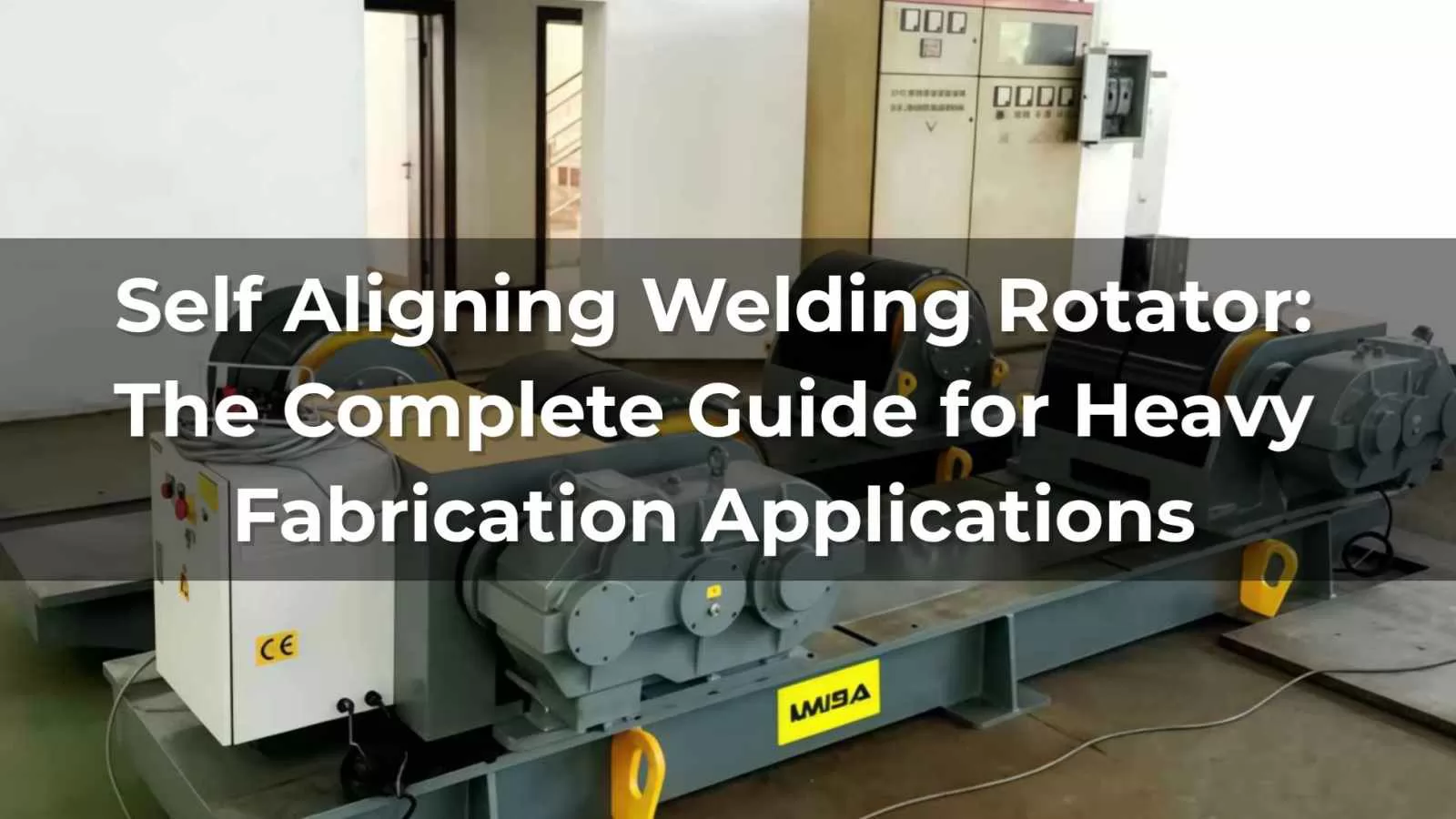
To overcome these barriers, advanced fabrication facilities rely on mechanized turning solutions. A self aligning welding rotator (SAWR) serves as an indispensable asset, engineered to securely support and smoothly rotate heavy cylindrical components during circumferential and longitudinal welding processes. By automating rotation and alignment, these systems dramatically boost production efficiency, ensure pristine welding accuracy, and safeguard workshop safety.
1. What Is a Self Aligning Welding Rotator?
2. How Does a Self Aligning Welding Rotator Work?
3. Key Benefits of Self Aligning Welding Rotators
4. Self Aligning vs Conventional Welding Rotators: What Is the Difference?
5. Applications of Self Aligning Welding Rotators in Heavy Fabrication
6. How to Choose the Right Self Aligning Welding Rotator?
7. Why Partner with a Professional Manufacturer for Custom Solutions?
9. Conclusion
A self aligning welding rotator (SAWR) is a specialized piece of welding automation equipment designed to support, clamp, and rotate cylindrical workpieces automatically. Unlike traditional workpiece handling equipment that requires tedious, manual adjustment of roller brackets every time a different diameter is processed, a self aligning welding rotator is engineered with a linkage mechanism that automatically adjusts its roller positions to match the outer diameter of the workpiece.
The primary purpose of a self aligning welding rotator is to ensure smooth, uniform, and continuous rotation of heavy cylinders, allowing operators or automated welding heads to maintain a consistent flat or horizontal welding position, commonly designated as the 1G/PA position.
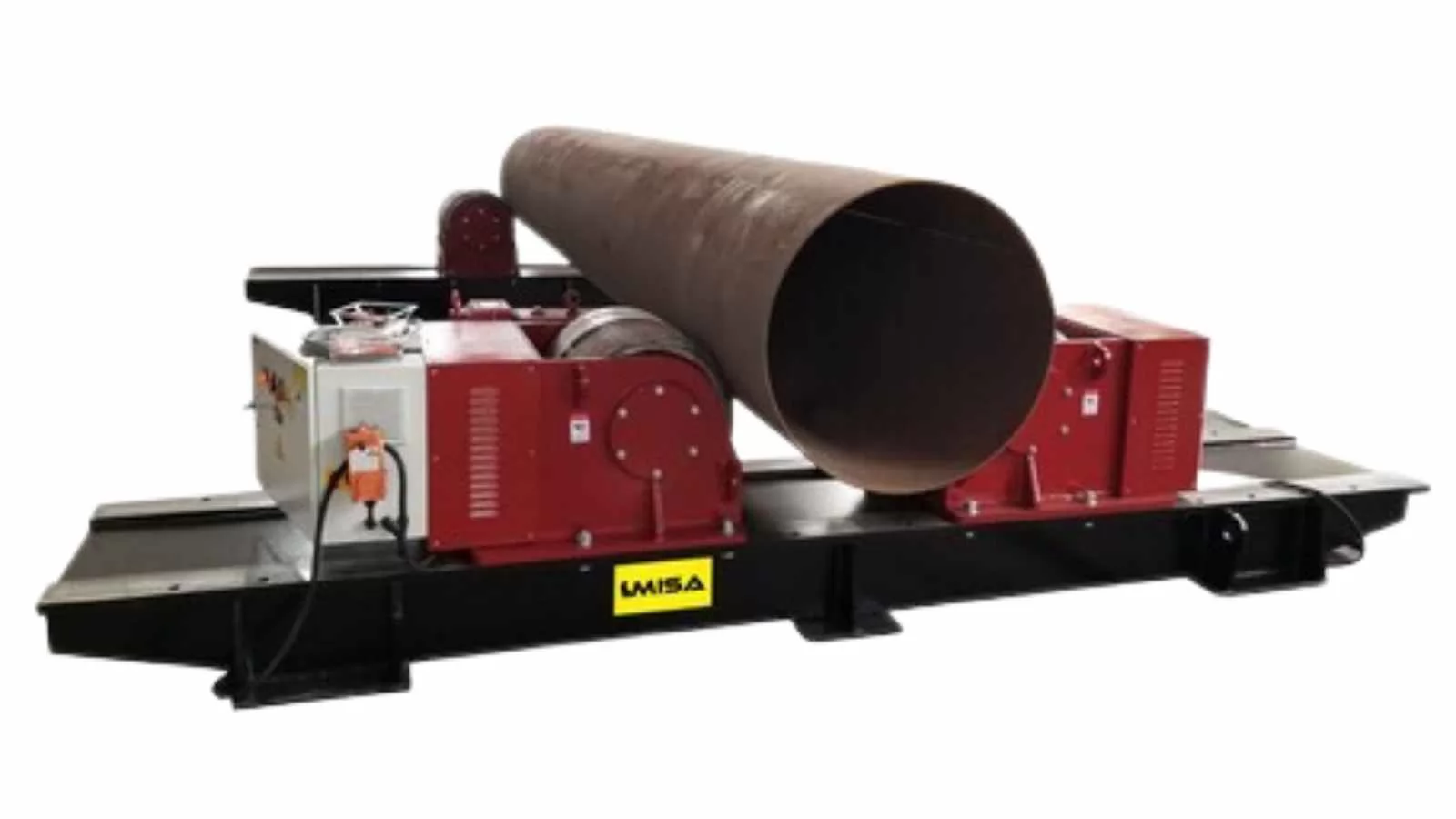
Understanding the mechanical and electrical synergy behind a self aligning welding rotator highlights why it is a preferred investment for modern fabrication facilities.
When a crane or overhead hoist lowers a heavy cylindrical workpiece onto the drive and idler roller assemblies, the massive weight presses down to trigger an immediate reaction from the independent swing arms or internal linkage of the self-aligning mechanism. The rollers pivot and center themselves against the curved surface, ensuring uniform contact pressure regardless of whether the diameter sits at the lower or upper limit of the machine's capacity. Once stable contact is secured, the drive system initiates rotation at a pre-programmed, steady speed while welding operations commence.
Investing in a high-grade welding rotator yields a rapid return on investment (ROI) by fundamentally transforming shop floor productivity across multiple dimensions.
Continuous, uninterrupted rotation eliminates the downtime associated with manual repositioning. Welders can execute long circumferential passes without stopping, maximizing arc-on time and accelerating project turnaround.
Stable and precise rotational speed control ensures uniform heat input and steady travel speed. This directly translates to smoother weld beads, superior penetration profiles, and a drastic reduction in costly rework or X-ray rejection rates.
Automating the rotation process frees up skilled laborers. Instead of requiring multiple operators to manually nudge, crane, or roll heavy sections, a single technician can safely manage the entire rotation and welding sequence.
Handling workpieces weighing tens or hundreds of tons manually or with makeshift turning devices poses catastrophic safety risks. Heavy-duty tank turning rolls and self-aligning units lock components securely in place, drastically minimizing the risk of rollovers, slips, and workplace injuries.
Because the rollers adapt automatically to varying diameters, fabrication shops can seamlessly transition from a small-diameter pipe section to a massive pressure vessel shell without wasting hours on manual bolting and re-rigging.
Choosing the right equipment depends heavily on production variety and batch sizes. Below is a direct comparison between self aligning models and conventional (bolt-adjustable) alternatives:
| Factor | Self Aligning Welding Rotator | Conventional Welding Rotator |
|---|---|---|
| Roller Adjustment | Automatic (via linkage mechanism) | Manual (bolt relocation) |
| Workpiece Diameter Flexibility | High (adjusts smoothly across a wide range) | Limited (requires manual repositioning per size) |
| Setup Time | Shorter (instantaneous self-centering) | Longer (requires manual measuring and bolting) |
| Operation Efficiency | Higher (ideal for mixed-diameter production) | Moderate (best for long runs of identical diameters) |
| Suitable Applications | Heavy fabrication with diverse sizes | Standard fabrication of uniform batch sizes |
For manufacturers handling multiple cylindrical workpieces of varying sizes daily, the self aligning welding rotator is overwhelmingly preferred due to its unmatched versatility and minimal setup overhead.
Pressure vessel fabrication requires strict adherence to international quality codes such as the American Society of Mechanical Engineers (ASME) standards. Using a precision pressure vessel welding rotator ensures flawless circumferential seams for chemical reactors, oil separators, and high-pressure steam drums.
In large-scale infrastructure and industrial plant construction, thick-walled pipe welding rotator systems provide the stable turning torque required for multi-pass root, fill, and cap welding on heavy-diameter pipelines.
Green energy infrastructure demands massive tubular steel sections. Self-aligning turning rolls provide the immense weight capacity and precise synchronization needed to fabricate towering wind turbine segments safely and efficiently.
During on-site or shop-floor storage tank fabrication, specialized tank turning rolls improve welding efficiency by keeping multi-layer shell courses rotating smoothly while automatic Submerged Arc Welding (SAW) or Gas Metal Arc Welding (GMAW) takes place.
Selecting the optimal machine for a heavy industrial facility requires careful evaluation of several critical technical parameters:
Procuring heavy-duty industrial automation requires partnering with experienced equipment builders who possess deep domain expertise in heavy fabrication. Industrial buyers should evaluate manufacturers based on proven engineering portfolios, strict quality control procedures, and comprehensive after-sales technical support.
When searching for a reliable welding rotator manufacturer, procurement managers should prioritize suppliers that offer robust customization capabilities. Standard off-the-shelf machinery frequently fails to address unique workshop constraints, specific load distributions, or specialized plant layouts.
Industry leaders frequently collaborate with specialized engineering firms such as MISA, a professional manufacturer renowned for delivering high-performance Welding Rotators & Tank Turning Rolls, precision Welding Positioners, and fully integrated custom welding automation solutions. MISA designs robust machinery tailored precisely to unique workpiece dimensions, stringent weight requirements, and specialized welding process standards. Procurement teams seeking reliable, heavy-duty production upgrades are encouraged to contact MISA directly for customized technical proposals.
Q: What is a self aligning welding rotator?
A: It is an automated welding turning device featuring a mechanical linkage system that automatically adjusts its roller spacing to securely grip and rotate cylindrical workpieces of varying diameters without manual intervention.
Q: What industries use welding rotators?
A: They are widely used in pressure vessel manufacturing, oil and gas tank fabrication, heavy pipe production, boiler building, and wind tower construction.
Q: What is the difference between welding rotators and turning rolls?
A: In modern industrial terminology, "welding rotators" and "turning rolls" are largely synonymous terms referring to motorized roller beds used to rotate cylindrical vessels during welding.
Q: How much weight can a welding rotator handle?
A: Capacities vary widely depending on the model, ranging from small 5-ton units up to heavy-duty industrial systems capable of supporting hundreds of tons when pairing power and idler units.
Q: How do I choose a welding rotator for pressure vessels?
A: Plant managers must evaluate the maximum load weight, maximum and minimum shell diameters, desired rotation speed range, and compliance with welding process standards like ASME.
Q: Can MISA provide customized welding rotator solutions?
A: Yes. MISA specializes in tailoring welding automation equipment to match unique workpiece weights, dimensions, and specialized plant layouts.
In the demanding landscape of modern heavy fabrication, operational efficiency, weld quality, and safety are paramount. The self aligning welding rotator stands out as a transformative asset, eliminating the bottlenecks of manual turning, ensuring consistent weld integrity, and protecting heavy capital investments. By integrating advanced automation, fabrication plants can scale their output while maintaining rigorous quality standards.
To elevate production lines with reliable, heavy-duty automation, partnering with an experienced manufacturer is essential. Procurement managers and plant engineers are encouraged to contact MISA today to explore comprehensive ranges of self aligning welding rotators and custom-engineered welding solutions designed to drive heavy industrial operations forward.