Innovative Welding Solutions: Rotators, Positioners, Manipulators and Automation Experts


English





.png)


_1764839273_WNo_1600d900.webp)
In modern industrial welding, precision, stability, and efficiency are critical factors that determine the quality of welds. Among the essential tools that help achieve these objectives is the Conventional Welding Rotator. This equipment is specifically designed to support and rotate cylindrical workpieces, such as steel pipes, tanks, pressure vessels, and other round components, ensuring smooth and controlled motion throughout the welding or assembly process.
Conventional welding rotators are widely used in industries like petrochemical, shipbuilding, steel fabrication, and pressure vessel manufacturing. By providing stable rotation, they allow welders to execute long seam welds with uniformity, minimize human error, and significantly improve overall productivity. These devices also reduce manual handling, which not only saves labor but also enhances workplace safety when dealing with heavy or cumbersome workpieces.
In addition to welding, conventional rotators play a key role in related operations such as grinding, polishing, coating, and assembly of cylindrical components. Their design flexibility and reliability make them indispensable in both small workshops and large industrial facilities. Understanding the functions, advantages, and applications of conventional welding rotators is essential for manufacturers who aim to optimize their welding processes and maintain high-quality production standards.
Throughout this article, we will explore the fundamental principles of conventional welding rotators, their key features, technical specifications, application areas, and practical tips for selecting the right model for your operations. Whether you are looking to improve efficiency, ensure consistent weld quality, or expand your industrial capabilities, this guide will provide a comprehensive overview of how Conventional Welding Rotators can meet your production needs.

A Conventional Welding Rotator is a specialized mechanical device designed to rotate cylindrical workpieces with precision and stability during welding, grinding, or assembly operations. Unlike self-aligning rotators that automatically adjust to the workpiece, conventional welding rotators require manual adjustment of the rollers to match the diameter of the workpiece. This simple yet highly reliable design has made them a preferred choice in various industrial settings for decades.
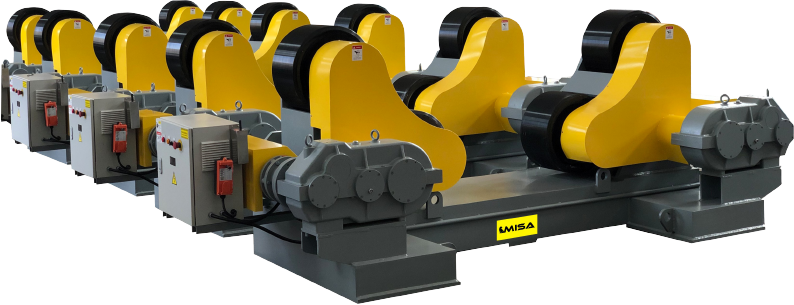
The basic structure of a conventional welding rotator typically includes a driving roller, a driven roller, and a sturdy supporting frame. The driving roller is powered by an electric motor, often equipped with a variable frequency drive (VFD) to control rotation speed. The driven roller rotates in sync with the driving roller, ensuring smooth movement of the workpiece. The supporting frame is constructed from high-strength steel to bear heavy loads and maintain alignment under continuous operation.
One of the key advantages of conventional welding rotators is their adaptability. The rollers can be adjusted to accommodate a wide range of pipe and tank diameters, making them suitable for small-diameter pipes as well as large industrial tanks. Manufacturers can rotate heavy workpieces weighing several tons with consistent speed, which is critical for maintaining weld quality over long seams or complex cylindrical structures.
In practice, conventional welding rotators are widely used in steel fabrication shops, pressure vessel manufacturing, and shipbuilding. For example, during the assembly of a large storage tank, the rotator allows welders to rotate the tank steadily, enabling continuous welding without repositioning the workpiece manually. Similarly, in pipeline construction, rotators ensure uniform weld penetration and reduce the risk of defects caused by uneven rotation.
Overall, a conventional welding rotator is not just a rotating platform but an essential tool that combines mechanical strength, precise control, and versatility. Its straightforward design, reliability, and broad industrial applicability make it a cornerstone in welding operations where precision, efficiency, and safety are paramount.
| Specification | Details |
|---|---|
| Load Capacity | From 5 tons to 500 tons (depending on model) |
| Roller Diameter | 200 mm – 500 mm |
| Roller Width | Adjustable to fit workpiece size |
| Workpiece Diameter Range | Small-diameter pipes to large tanks |
| Motor Power | Variable, with VFD for speed control |
| Rotation Speed | Adjustable according to welding/grinding requirements |
| Frame Material | High-strength steel |
Selecting the appropriate Conventional Welding Rotator is crucial to ensure safe operation, high weld quality, and efficient production. The first factor to consider is the workpiece size and weight. Knowing the maximum diameter, length, and load of the pipes, tanks, or cylindrical components you will handle allows you to choose a rotator with sufficient load capacity and adjustable roller spacing.
Another important consideration is the type of motor and control system. Conventional welding rotators with variable frequency drives (VFD) or precise speed control provide greater flexibility during welding or grinding, allowing operators to adjust rotation speed according to the process requirements. This ensures uniform welds and reduces mechanical stress on the workpiece and equipment.
Material construction and roller design also play a key role. High-strength steel frames and wear-resistant rollers enhance durability and extend the service life of the equipment. Polyurethane-coated rollers are ideal for minimizing surface damage on sensitive workpieces, while hardened steel rollers provide maximum grip for heavy-duty applications.
Operational environment and safety features must also be evaluated. For workshops with limited space, compact or modular rotator designs may be preferable. Additional features such as tilting rollers, anti-slip mechanisms, or remote control options improve safety and make handling large or awkward workpieces easier. It is also important to consider maintenance accessibility and after-sales support from the manufacturer.
Finally, selecting a reputable brand with proven industrial experience ensures reliability and long-term performance. Considering these factors carefully will help you choose the right Conventional Welding Rotator that matches your production needs, maximizes efficiency, and ensures consistent welding quality across all projects.
MISA’s Conventional Welding Rotators are engineered to deliver smooth and consistent rotation for a wide range of cylindrical workpieces, including pipes, tanks, and pressure vessels. By providing stable motion and precise control, these rotators enhance productivity and weld quality, ensuring uniform results while reducing operator fatigue during long or complex welding operations.
One of the key advantages of MISA rotators is their versatility. Adjustable speed controls allow operators to fine-tune rotation to match specific welding or assembly requirements, while the durable construction and robust steel frame provide long-lasting performance in demanding industrial environments. Featuring driven and idler rollers along with adjustable components, MISA rotators offer exceptional stability and reliability, even when handling heavy or oversized workpieces.
MISA’s commitment to innovation and quality is reflected in every unit. These rotators are designed not only for performance but also for ease of operation and maintenance, making them suitable for a variety of industries, including oil and gas, manufacturing, and construction. By optimizing welding processes, MISA Conventional Welding Rotators help manufacturers achieve consistent, high-quality welds while improving workflow efficiency.
With proven durability, precision control, and superior engineering, MISA rotators represent a trusted solution for industrial welding challenges. Investing in MISA Conventional Welding Rotators ensures reliable performance, long-term value, and enhanced production capabilities for companies seeking top-tier welding equipment.
In summary, the Conventional Welding Rotator is an essential tool for any industrial operation involving cylindrical or round workpieces. From steel pipes and tanks to pressure vessels and shipbuilding components, these rotators provide stable, precise rotation that enhances weld quality, increases productivity, and reduces manual labor and operator fatigue.
MISA’s Conventional Welding Rotators stand out for their durability, versatility, and innovative design. With adjustable speed controls, robust frames, and reliable rollers, they deliver consistent performance across a wide range of industrial applications. Whether in oil and gas, manufacturing, construction, or heavy fabrication, MISA rotators ensure that welding processes are efficient, safe, and of the highest quality.
By understanding the key features, technical specifications, and applications outlined in this guide, manufacturers can make informed decisions when selecting a conventional welding rotator. Trusting in MISA’s expertise and commitment to quality ensures long-term reliability, exceptional results, and optimized production workflows. Investing in a MISA Conventional Welding Rotator is not just a choice of equipment—it is a strategic step towards achieving superior welding performance in any industrial setting.